
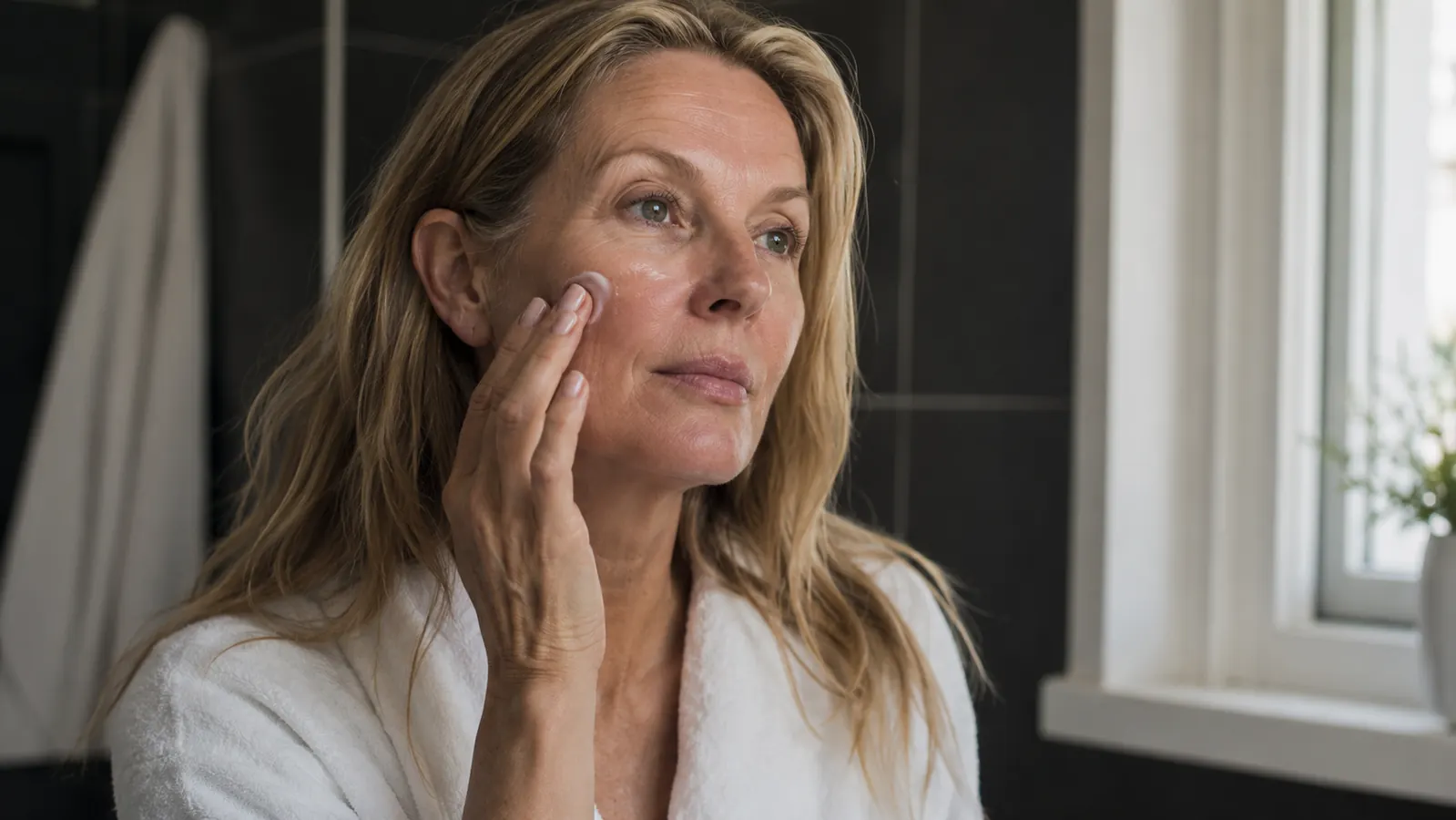
I spent more money on wrinkle creams in my forties than I'm comfortable admitting, and the thing that actually slowed down what I saw in the mirror wasn't any of them. It was sunscreen. I didn't want to believe that either, because a plain, everyday bottle of SPF felt too ordinary to be doing more than a fancy jar of retinol cream. But three years into wearing a facial sunscreen every single morning, rain or shine, the difference in my skin's tone and texture compared to my sister, who skips it most days, is not subtle anymore. We're eighteen months apart in age. We don't look it.
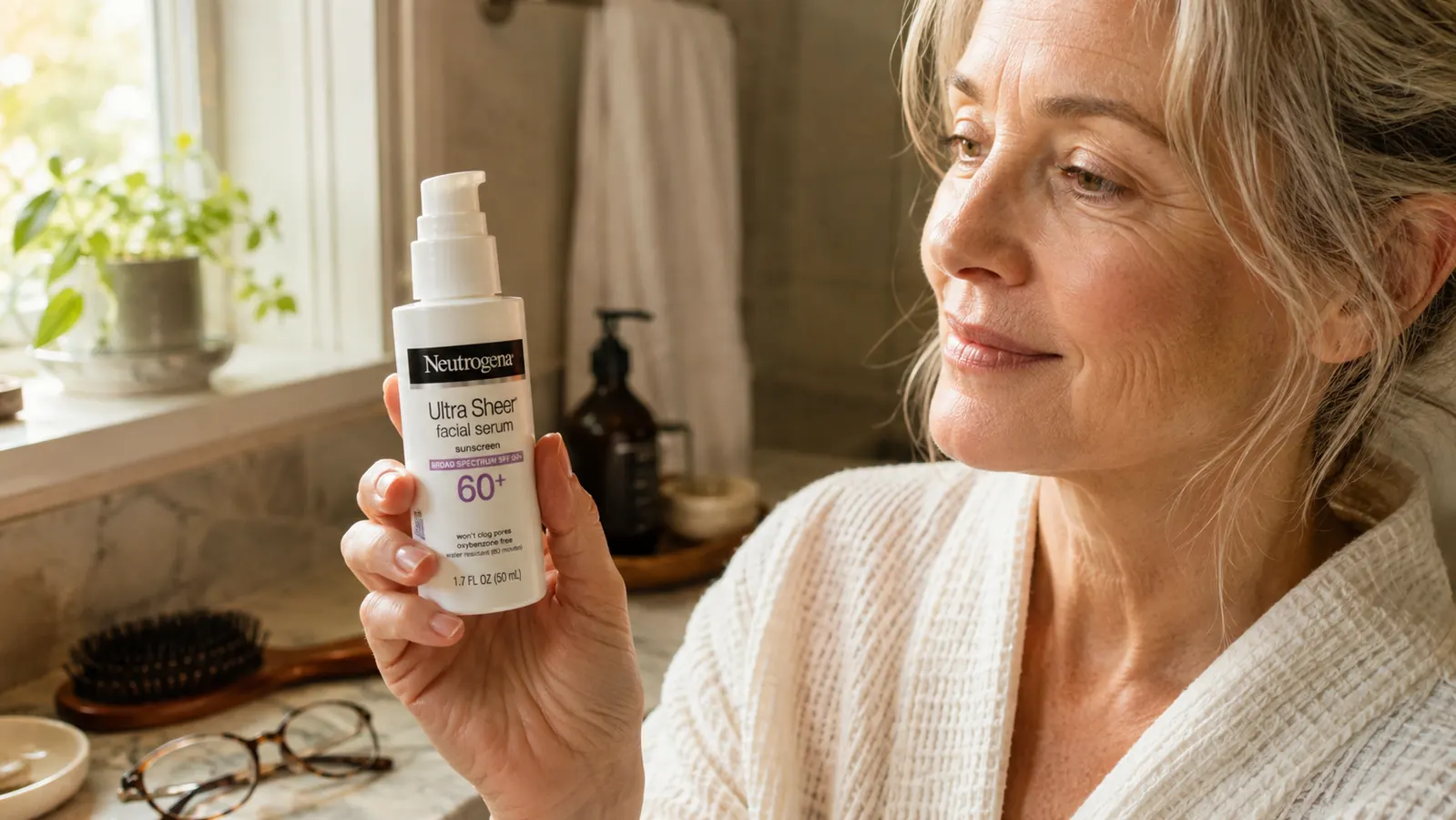
The one I've stuck with is Neutrogena's Ultra Sheer sunscreen serum, SPF 60. Here's what I'd actually tell a friend if she asked whether daily sunscreen is worth the habit. Ten reasons, no fluff, nothing I wouldn't say to her face over coffee.
The bottle that's been in my morning routine for three years
If you want to see the exact one I use every morning, Neutrogena's Ultra Sheer sunscreen serum, SPF 60, is what's sitting on my bathroom shelf right now. Current price and availability are on Amazon.
Amazon Check Today's Price on Amazon →It stopped new sun damage before it could add up
Most of what people call aging skin, the kind with uneven patches and a rougher surface, comes from years of unprotected sun exposure stacking on top of itself. I can't undo the summers I spent in my twenties without a thought for SPF, but I can stop adding to the pile. Wearing sunscreen every morning is the one habit that draws a line under that damage and keeps it from getting worse. I wrote about how that shift felt in more detail in my long-term review, but the short version is that new damage simply stopped showing up.
The fine lines around my eyes stopped deepening
I want to be honest about this one because I've read claims that promise more than any sunscreen can deliver. My crow's feet didn't disappear. But they stopped getting more pronounced year over year, which is a meaningful change when you compare photos of yourself at two-year intervals the way I do. Sun exposure breaks down the collagen that keeps skin springy, and cutting that exposure off daily is the closest thing to hitting pause I've found.
It's a thin serum, not a thick lotion, so I actually wear it every day
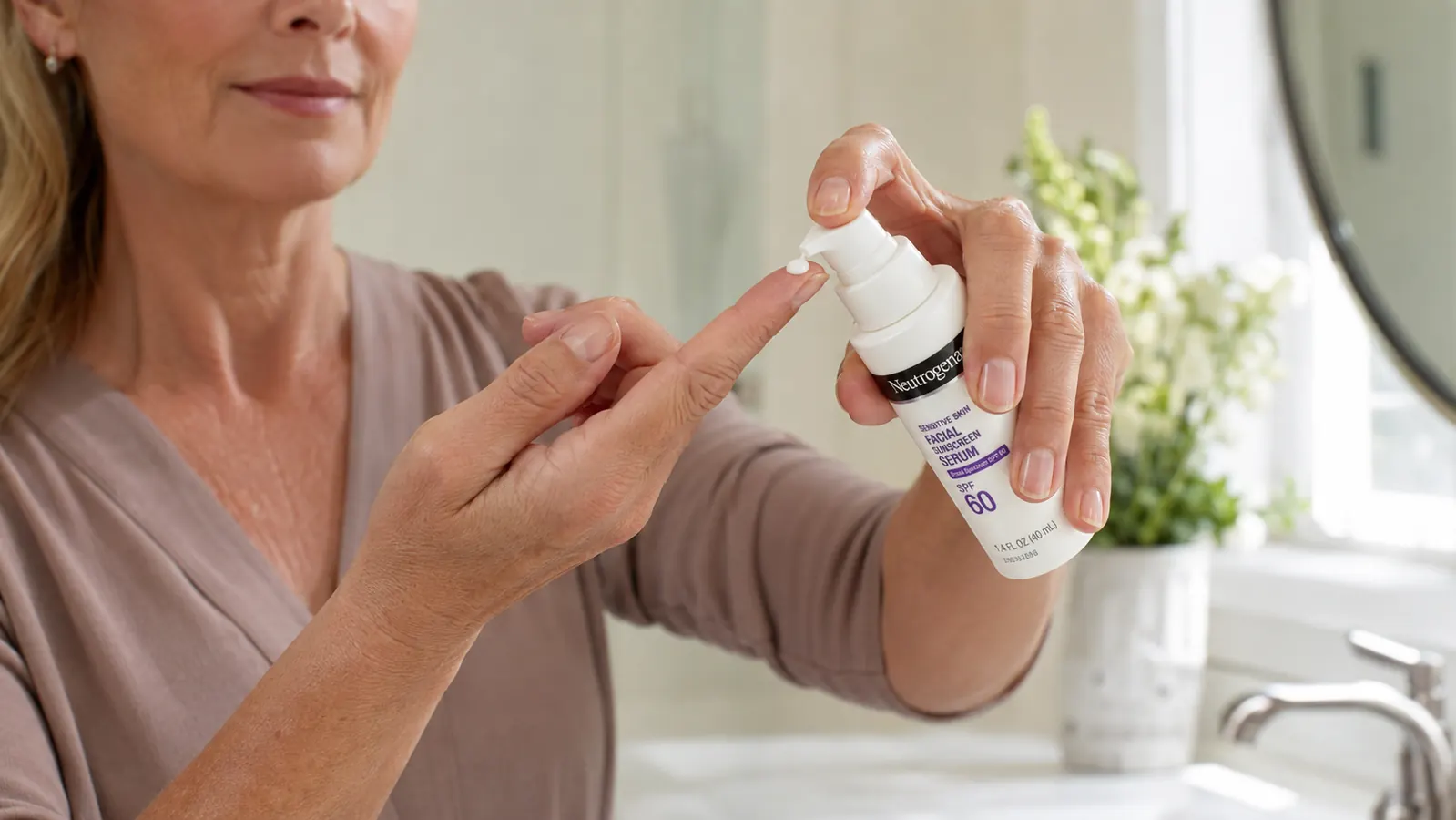
The reason I gave up on sunscreen for years wasn't laziness, it was texture. Every SPF I tried felt heavy, sat on top of my makeup, or left a faint white cast in photos. The Neutrogena serum is genuinely sheer. It sinks in within about a minute and doesn't leave a film. That sounds like a small thing until you realize the best sunscreen is the one you'll actually put on your face every morning without dreading it.
SPF 60 gives me margin for the mornings I forget to reapply
I'm not perfect about reapplying midday, especially on days I don't leave the house much. Starting with SPF 60 instead of a lower number gives me some cushion for the mornings I only put it on once and forget about it by 2pm. It's not an excuse to skip reapplication when I know I'll be outside for hours, but for an average errand-running day, that higher starting number has made me feel less anxious about the gaps.
It's fragrance-free, so it doesn't irritate my eyes or my skin
I have sensitive eyes, and scented sunscreens used to make them water within minutes of application, which meant mascara running down my cheek before I'd even left the bathroom. The Neutrogena serum is fragrance-free, and that single detail is why it stuck when other sunscreens didn't. If you've struggled with stinging or watering eyes from SPF in the past, that's usually the fragrance, not the sunscreen itself.
A couple of faint dark patches near my hairline stopped getting darker
I've had some faint discoloration near my temples for years, mostly from decades of sun exposure before I knew better. The Neutrogena serum didn't erase it, and I wouldn't tell you it did. But it stopped getting darker every summer the way it used to, and that alone was worth the habit. Sun exposure is what triggers pigment cells to keep producing more color in spots that are already discolored, so blocking it is often the difference between a spot fading slowly and one that keeps deepening.
It works fine under makeup, which removed my last excuse to skip it
For years I told myself sunscreen and makeup didn't mix, that it would pill or slide my foundation right off my face by noon. The Neutrogena serum settles in clean enough that my tinted moisturizer goes on smoothly over it, no balling up, no streaking. If you've had pilling problems with other sunscreens, I put together a full guide on wearing sunscreen under makeup without pilling based on what finally worked for me.
My overall tone looks more even than it did three years ago
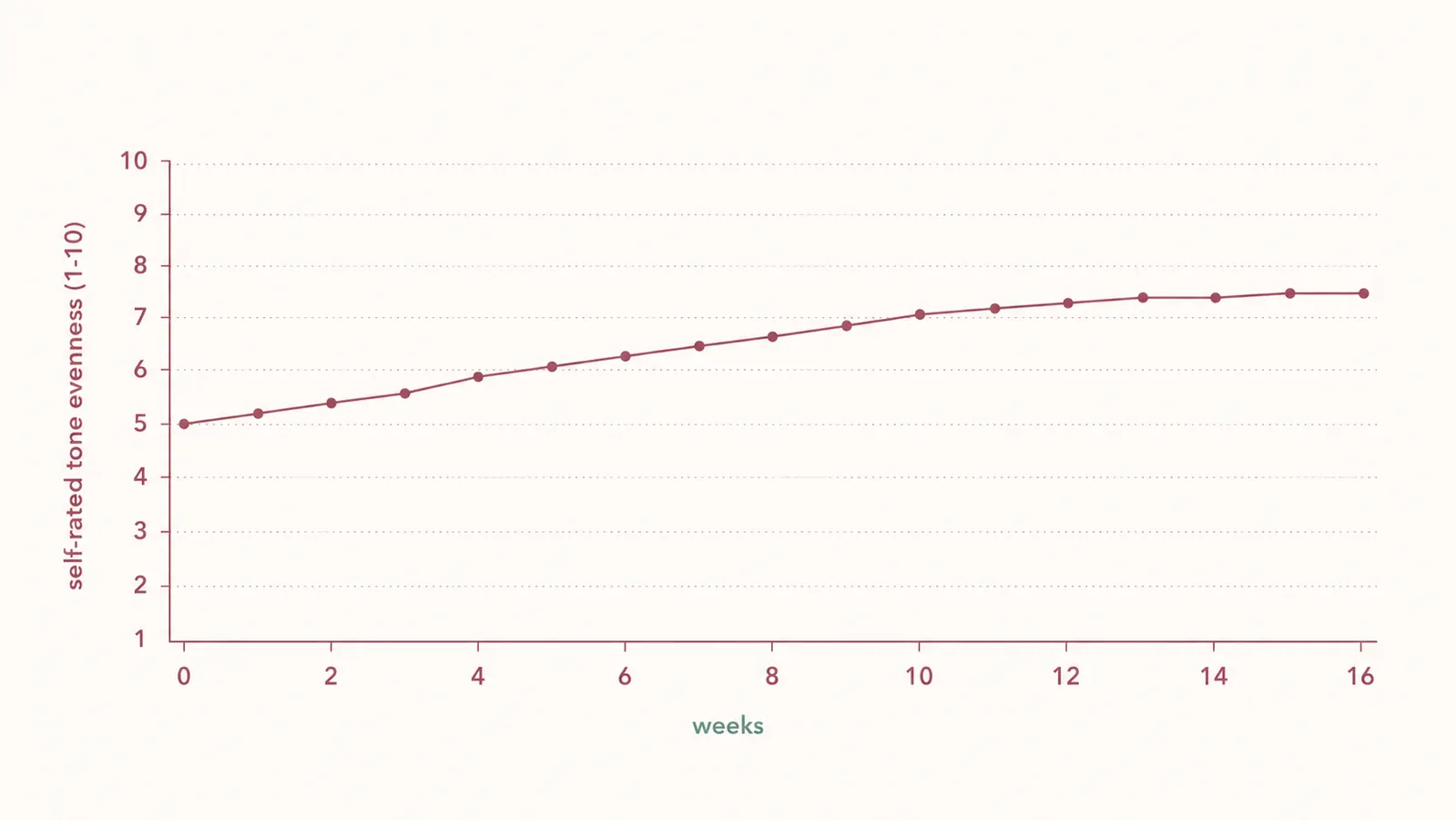
This is the change I notice most in natural light, not flash photos. My cheeks and forehead used to have a blotchy, uneven quality that I'd tried to correct with brightening serums for years without much luck. Once sun exposure stopped adding new unevenness on top of the old, my skin tone slowly leveled out on its own over about four months. It wasn't dramatic week to week. It was the kind of change you only notice looking back at old photos.
It's cheap enough that I never have an excuse to run out
A bottle of the Neutrogena serum lasts me about two months using a dime-sized amount every morning, and it's inexpensive enough that I keep a backup bottle in the cabinet so I'm never caught without it. Compare that to the anti-aging serums I used to buy that cost four or five times as much and did less. Once I started thinking of sunscreen as the actual anti-aging product and everything else as extra, my whole routine got simpler and cheaper.
It's a low-effort habit that compounds over years, not weeks
Sunscreen doesn't work like a treatment that shows results in a month. It works by quietly preventing damage you'd otherwise be undoing later with something far more expensive. The payoff isn't obvious at first, which is probably why so many of us skip it. But three years in, it's the one product in my routine I'd never stop buying. If you want the unfiltered version of how those three years actually went, including the months I got lazy about it, I wrote it up in this honest review.
What I'd Skip
I wouldn't expect sunscreen alone to reverse deep, longstanding lines or erase discoloration that's been building for decades. It's prevention, not correction, and treating it like a miracle fix sets you up to be disappointed. I also wouldn't apply it once in the morning and consider the day handled if I'm outside for hours at a stretch. It needs reapplying roughly every two hours in direct sun, and I've gotten a mild pink forehead on hikes when I skipped that. And I wouldn't buy a scented version if you have sensitive eyes, no matter how nice it smells in the bottle. Fragrance is the most common reason people give up on sunscreen and go back to skipping it.
It didn't erase the years I spent without it. It just stopped adding new ones on top.
Still deciding? Here's the one on my bathroom shelf
After three years of mornings with this in my routine, it's the step I'd be most upset to run out of. See current pricing and reviews for yourself before you decide.
Amazon Check Today's Price on Amazon →