

The first time I put a retinol serum on my face, I did everything wrong. I used it every night, straight after cleansing, no moisturizer underneath, no ramp-up period, nothing. By day four my forehead was flaking in the mirror at 7am and my cheeks felt raw, like I'd been out in a windstorm without moisturizer. I put the bottle in a drawer for two years and decided retinol just wasn't for my skin.
It wasn't the retinol. It was how I used it. When I picked it back up years later, the same kind of active ingredient, this time in the drugstore-priced Tree of Life Retinol Serum I still reach for most nights now, worked because I finally slowed down and built up to it the way I should have the first time. Below is the method I wish someone had handed me back then: five steps, in order, that get you the smoother texture and fewer fine lines retinol is known for, without the week of red, flaking skin that makes most people quit before it ever works.
Before Your Skin Reacts to the Wrong Retinol, or the Right One Used Wrong
Most bad retinol experiences aren't about the ingredient, they're about starting too strong, too fast, with nothing to buffer it. Tree of Life Retinol Serum is inexpensive enough to actually follow the slow ramp-up below without feeling like you wasted money if you only use it twice a week at first.
Amazon Check Today's Price on Amazon →Step 1: Patch Test First, Even If Nothing Has Ever Bothered Your Skin Before
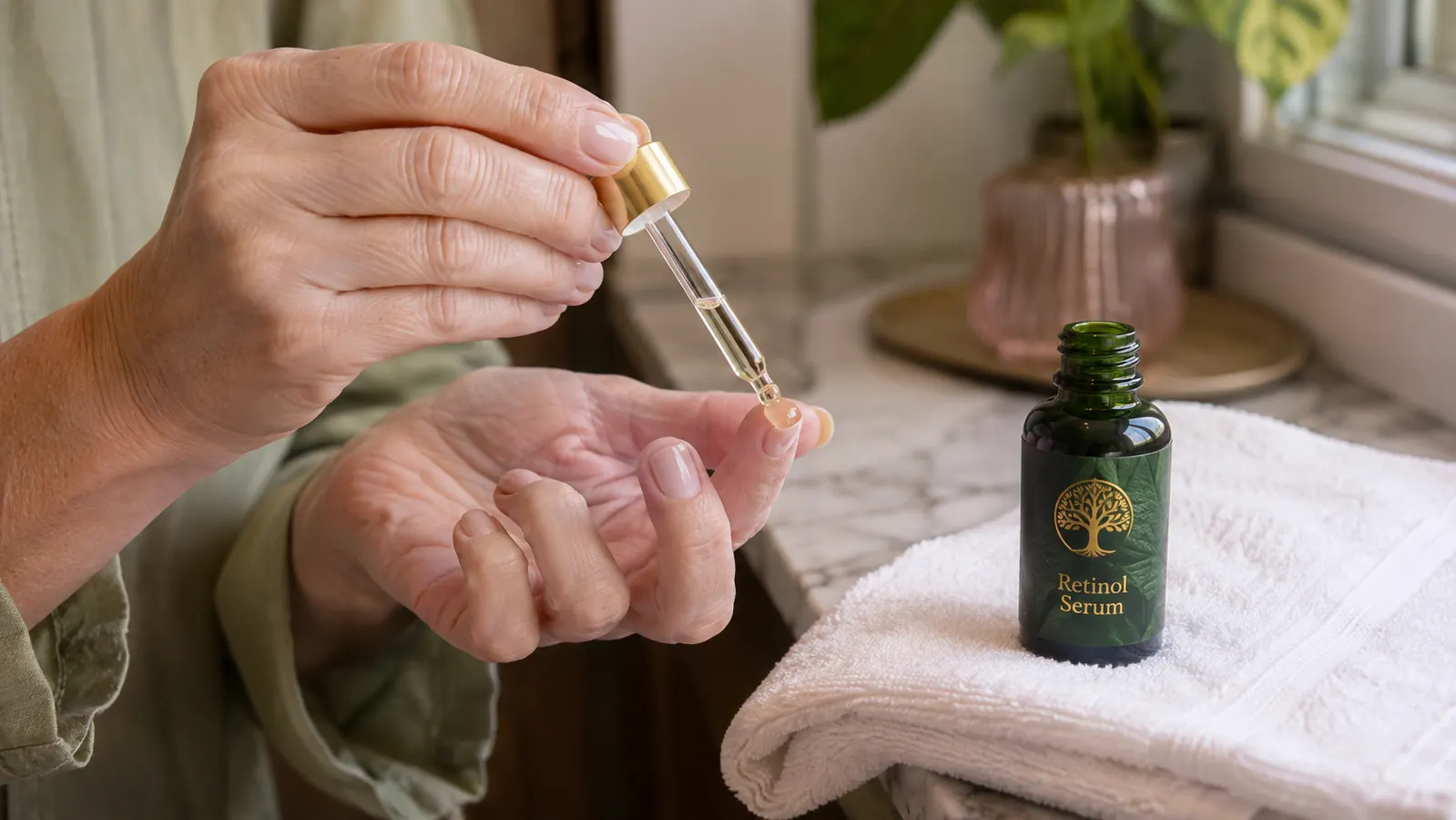
Put a small amount, about a dropper's worth for a serum this size, on a patch of skin you can watch for two days, the inside of your forearm or just behind your ear works. This is exactly how I patch-tested the Tree of Life serum before it ever touched my face. Use a thin layer, not a puddle. Wait 48 hours before you touch your face with it at all.
You're looking for anything past a little warmth or mild tingling, real redness that spreads, swelling, itching that doesn't quit, or small bumps. A little pink that fades within an hour is normal. Anything that's still angry the next morning means this particular product needs a different approach, or isn't right for your skin at all.
One more thing worth saying plainly before you start anywhere on your face: retinol isn't something to use if you're pregnant or breastfeeding. If that applies to you, skip this whole routine and ask your doctor what's safe to use instead.
Pick a night you'll actually remember, not "whenever." Retinol before bed works well because you're not adding sunscreen or makeup on top of it, and it has hours to work while you're not touching your face. If you shower at night, apply it after your skin has fully dried, not while it's still damp, damp skin absorbs more product than your skin can handle in these first weeks.
If the patch test comes back clean, that's a green light to start on your face, not a green light to skip the slow ramp in step three. A patch of skin on your arm and the skin on your face, especially around the mouth and eyes, don't behave the same way.
Step 2: Buffer It Between Moisturizer, the Sandwich Method
Wash your face, wait until it's fully dry, then apply a thin layer of a plain, fragrance-free moisturizer first. Wait about five minutes. Then apply a pea-sized amount of the Tree of Life serum only where you want it, forehead, cheeks, chin, staying away from the eye area, the corners of your nose, and the sides of your mouth. If your skin still feels tight after that, add one more thin layer of moisturizer on top.
That's the sandwich, moisturizer underneath and moisturizer on top if you need it, with retinol in the middle. It sounds like it would weaken the product. In practice it slows down how fast the retinol reaches your skin, which is exactly what you want in the first several weeks. Full strength, straight onto bare skin, is how most people burn themselves out of using retinol at all.
A pea-sized amount covers your whole face. More product doesn't work faster, it just sits on skin that can't process it yet and turns into redness by morning. If the dropper gives you more than that, dab the extra back into the bottle or save it, don't rub it all in.
Keep it away from your eyelids and the delicate skin right under your eyes altogether, that skin is thinner and reacts faster than the rest of your face. If you want something there, a dedicated eye cream is the better call, not your retinol serum stretched to cover territory it wasn't meant for.
Step 3: Start at Twice a Week, Not Every Night
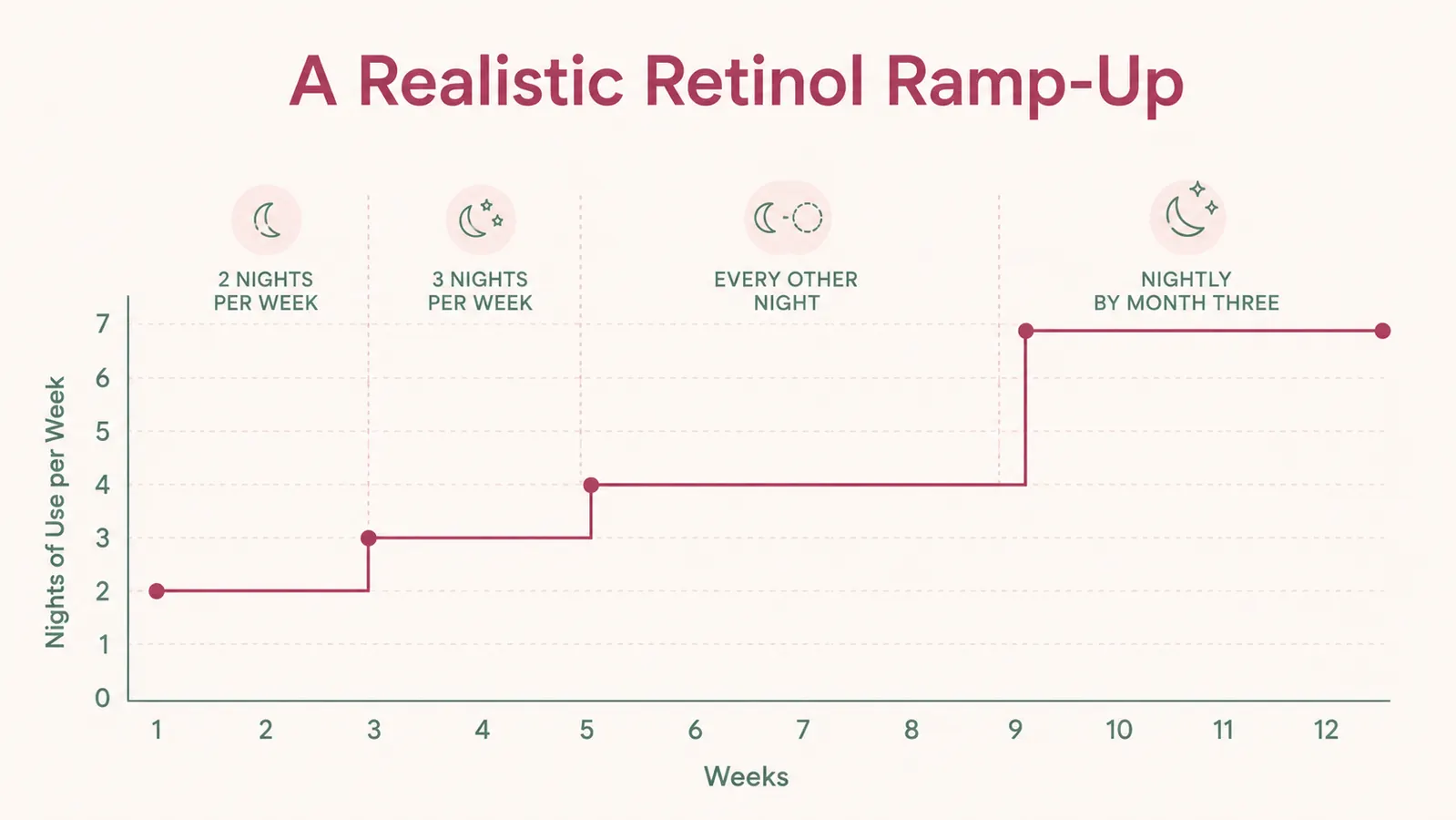
For the first two weeks, use retinol two nights a week only, say Monday and Thursday, with nothing else active in between. If your skin looks and feels normal by the third week, move to three nights a week. If that goes fine for another two weeks, move to every other night. Nightly use, if you want to get there at all, is usually a two to three month destination, not a starting point.
Here's what normal looks like along the way. Week one, you might notice almost nothing, maybe some tightness an hour after applying. Week two and three, a little flaking around the nose and mouth is common and isn't a sign anything's wrong, it's dead skin turning over faster than usual. By week four to six, most people start noticing smoother texture in the mirror, makeup sitting better, pores looking a little less noticeable. Fine lines and dark spots are usually a month three story, not a week three one.
The ramp matters more than the product. I've seen people use an expensive retinoid and still end up red and peeling for two weeks because they jumped straight to nightly, and I've seen the nine dollar Tree of Life serum work beautifully because someone was patient with it. Slow wins here.
If a night at your current frequency leaves you noticeably more irritated than the last one, that's your skin asking you to back off, not push through. Drop back to the last frequency that felt fine, stay there for another week or two, then try moving up again. Pushing through real irritation doesn't get you results faster, it just extends how long your skin stays angry.

Step 4: Clear Everything Else Off the Same Nights
On the nights you use retinol, that's the only active ingredient your skin gets. No AHA or BHA exfoliating toner, no extra vitamin C serum, no physical scrub, no other retinoid layered on top. Stacking actives is one of the fastest ways to turn a manageable adjustment period into a genuinely irritated face.
If you already use a vitamin C serum in your routine, keep it, just move it to mornings and let retinol have your nights to itself. They don't need to fight for the same eight hours.
If you're also using anything for acne, benzoyl peroxide especially, keep it far away from retinol nights too. The two together are a common way people end up with skin that's both dry and inflamed at once. Same rule applies, pick a lane for each night rather than layering everything you own.
What's fine to keep every single night, retinol or not: a gentle, non-foaming cleanser, plain hyaluronic acid if your skin likes it, and a basic moisturizer with ceramides. None of those compete with what retinol is doing, they just support it.
Step 5: Sunscreen Every Morning, No Exceptions
Retinol makes skin noticeably more sensitive to sun while your skin barrier is adjusting, and honestly for as long as you keep using it. That means a broad-spectrum sunscreen, SPF 30 or higher, every single morning, not just on beach days or long drives. Cloudy days count too.
This is the step people skip, and it's the one that undoes the most work. You can do everything else right, buffer properly, ramp up slowly, and still end up with more redness and eventually more sun damage if the mornings after aren't protected. It takes fifteen seconds to apply. It's worth the fifteen seconds.
A moisturizer with SPF built in can work for a quick errand, but for a full day out, a separate sunscreen underneath your moisturizer or makeup does a better job than expecting one product to do both jobs well. Reapply if you're outside for hours, the SPF in most daily moisturizers isn't designed to last all day on its own.
What Else Helps While Your Skin Adjusts
Everything underneath the retinol matters almost as much as the retinol itself. A stripped, over-cleansed face reacts worse to any active ingredient. Use a gentle cleanser, skip hot water, and keep a basic moisturizer with ceramides or hyaluronic acid in daily rotation whether or not it's a retinol night. Well-hydrated skin tolerates the ramp-up noticeably better than dry, tight skin does.
Know the difference between adjustment and a real reaction. Mild tingling for a few minutes after applying, occasional light flaking, and skin that looks a little pink and settles by morning are all part of the normal process most people go through in the first month. Swelling, blistering, hives, intense burning that doesn't ease up, or redness that spreads and stays for days are not normal, and that's when you stop using the product and see a doctor rather than waiting it out.
Skin type changes how much buffering you actually need. Oilier skin often tolerates a faster ramp and can sometimes skip the moisturizer-underneath step after the first month. Drier or more sensitive skin usually needs the full sandwich method for longer, sometimes for as long as you keep using retinol at all. Neither is doing it wrong, they're just different starting points.
I kept notes on my own skin through the first six months of using the Tree of Life serum, week by week, including the two weeks it looked worse before it looked better. If you want the full, unedited version of what changed and what didn't, I wrote it up in my long-term review, and the more unfiltered take, including the parts that annoyed me, is in my honest review.
None of this requires an expensive bottle to work. What it requires is following the order above and not rushing it because a nine dollar serum feels low-stakes enough to actually use consistently for the two or three months it takes to see anything, which matters more than what the bottle costs.
The instructions on the bottle say apply nightly. Nobody tells you nightly is where you end up, not where you start.
Give It the Slow Start It Actually Needs
Retinol works. Most of the bad reviews online are really reviews of someone's first two weeks, not the product. Start twice a week, buffer it, wear sunscreen every morning, and give the Tree of Life Retinol Serum the two to three months this kind of ingredient actually needs to show up in the mirror.
Amazon Check Today's Price on Amazon →