

I'm Vivian Slade, I'm fifty-six, and last October I finally admitted that the two lines across my forehead weren't going to soften on their own no matter how much water I drank or how many silk pillowcases I bought. My sister had been telling me for a year to just start using a retinol, and I kept putting it off because every horror story I'd read online involved someone's face peeling like a sunburn in week one. In late October I bought a bottle of Tree of Life Retinol Serum, the one sitting at over 143,000 reviews and a 4.4-star average, mostly because the price meant I wouldn't feel like I'd wasted real money if my skin rejected it. This is what six straight months of using it every night actually did, and what it never quite finished doing.
I want to say upfront that I'm not a dermatologist, and I didn't have anyone examining my skin under a magnifying lamp along the way. What I have is my own bathroom mirror at 7am, a phone full of photos taken in the same spot by my kitchen window every couple of weeks, and fifty-six years on this particular face. That's a narrower kind of evidence than a lab study, and I think it's worth saying so plainly instead of dressing it up.
The Quick Verdict
A genuinely effective entry-level retinol that softened my forehead lines and evened my texture over six months, but the first three weeks of flaking were rougher than I expected and the tube runs out faster than the price makes it feel like it should.
Amazon Check Today's Price →Tired of Forehead Lines That Water and Sleep Never Seem to Touch?
I put off retinol for a year because of the peeling stories. Here's what six months of nightly use with this particular serum actually looked like on my fifty-six-year-old face, plus where to check today's price if you want to see for yourself.
Amazon Check Today's Price on Amazon →How I've Actually Used It Every Night for Six Months
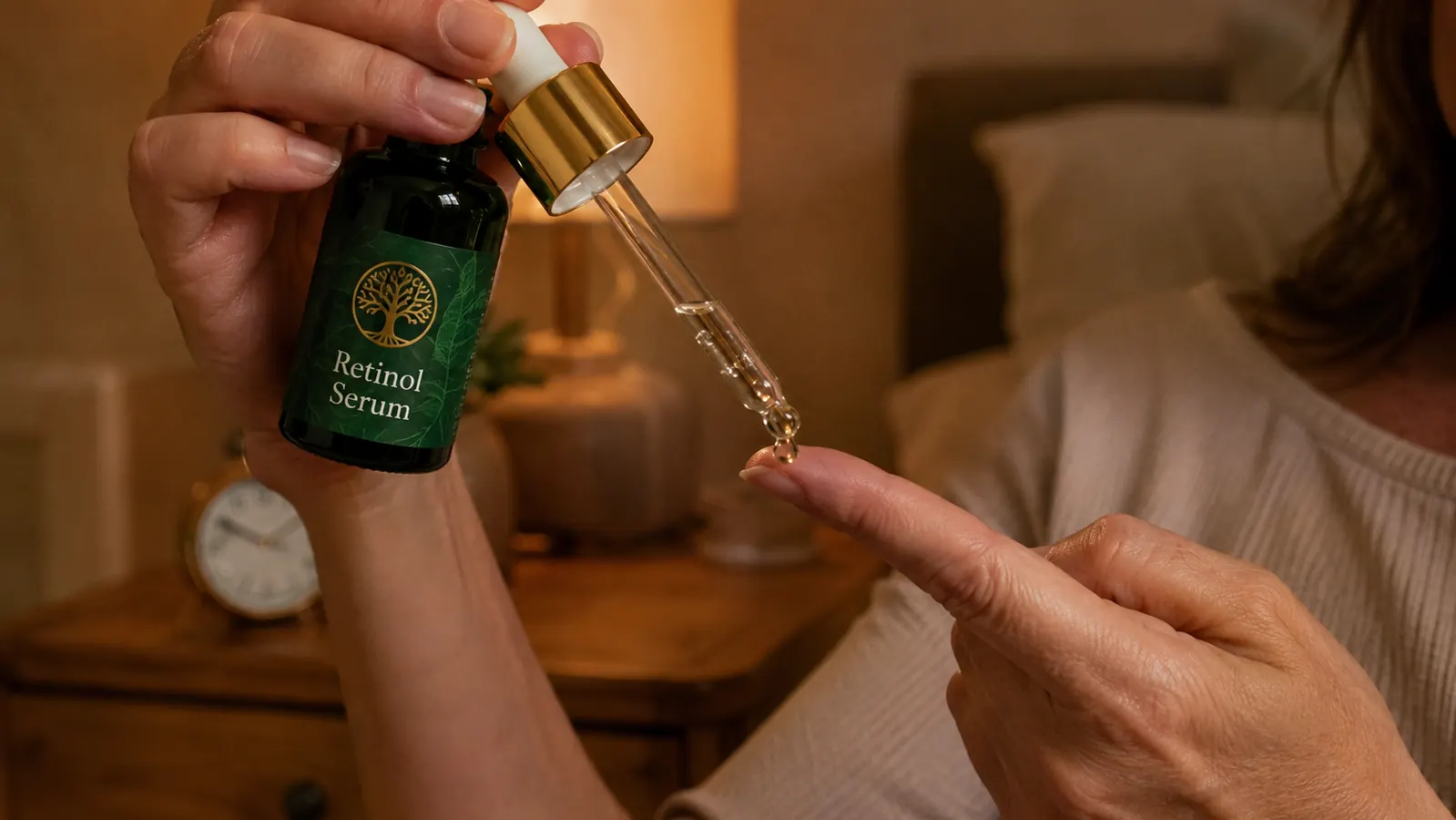
I started slow on purpose with the Tree of Life serum, twice a week for the first two weeks, Tuesday and Friday nights, because I'd read enough about retinization to know that rushing it is how people end up with the peeling they complain about in reviews. I cleansed, waited a full twenty minutes for my skin to be completely dry, then used two drops across my forehead, cheeks, and chin, avoiding the inner corners of my eyes and the sides of my nose where my skin has always been thinnest. After it absorbed, usually about three minutes, I followed with a plain, fragrance-free moisturizer, since retinol on bare skin without a buffer felt like asking for trouble on my particular face.
By week three I moved to every other night, and by week six I was applying it nightly without issue. I never went beyond two drops even once my skin had adjusted, since more product isn't what speeds up results with a retinoid, it just increases the odds of irritation. Every single morning after, without exception, I wore a mineral sunscreen, because retinol makes skin more reactive to sun exposure and I wasn't going to spend six months building something up at night just to undo it walking the dog at 8am.
I did a patch test on my inner forearm for three nights before it ever touched my face, and I'd tell anyone with sensitive or reactive skin to do the same regardless of how gentle a label claims to be. My arm showed nothing, no redness, no itching, so I moved to my face on night four, still on the twice-a-week schedule.
The Adjustment Period Nobody Wants to Talk About
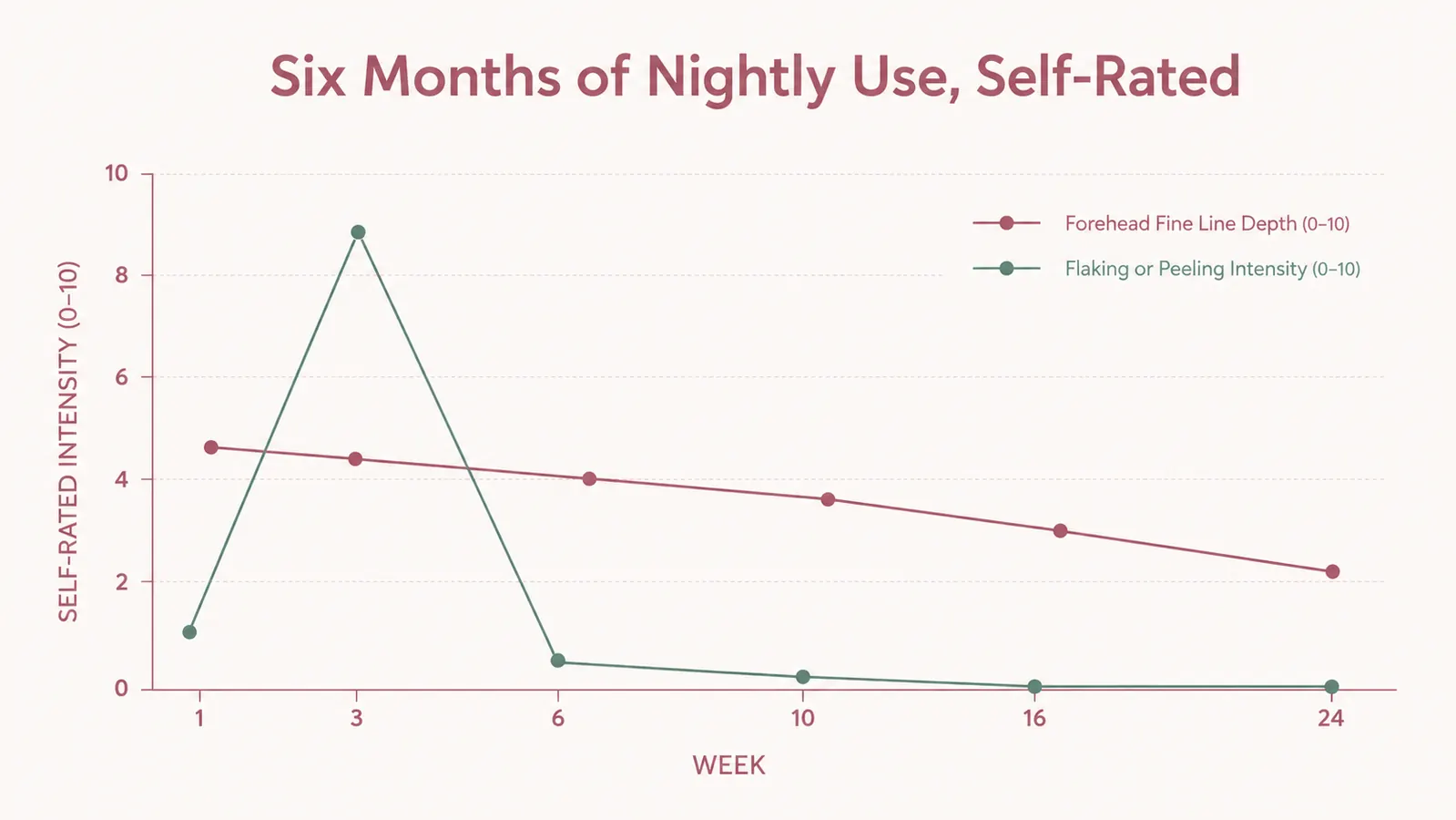
I'm not going to skip this part, because it's the part that made me almost quit. Around day twelve of using the Tree of Life serum, small patches of dry, flaky skin showed up along my jawline and beside my nose, the kind of flaking that catches on a washcloth and looks worse under bathroom light than it probably is. It lasted a little over two weeks, worst around days fourteen through eighteen, and it came with a tightness that made smiling feel slightly uncomfortable by evening. I didn't stop using the serum, I just backed off to once a week for that stretch and leaned hard on a thicker moisturizer, and it settled on its own by the start of week four.
I want to be honest that this period is exactly why so many people give up on retinol in the first month and never see what it can actually do. It looks like the product is hurting your skin, and in a narrow sense it is disrupting the surface temporarily, but for me it resolved completely and never came back once my skin adjusted. If you're earlier in your own retinol decision and want the shorter version of how to get through that stretch without quitting, I wrote a separate piece on how to start using retinol without irritation that walks through the ramp-up schedule I eventually settled on in more detail than I have room for here.
I'll also say plainly that I have no idea whether my particular flaking window is typical. My sister used a different retinol two years ago and told me she had almost no adjustment period at all, just a little dryness for a few days. Skin varies enough here that I'd trust my own two weeks less as a universal timeline and more as one data point from one face. What I can say is that the temptation to quit was strongest right in the middle of that window, day fifteen or so, and if I'd stopped there I would have written this off as a product that didn't agree with me, which would have missed everything that came afterward.
What Actually Changed by Month Six, and What Took Longer
Texture was the first thing to shift, and it happened faster than the fine lines did. By week eight my forehead and cheeks felt smoother under my fingertips in a way I noticed most while applying moisturizer, less like sandpaper in small patches, more uniform. That's a feeling more than a visible change, and I want to be precise about the distinction, because it would have been easy to talk myself into seeing something in the mirror that was really just a change in how my skin felt to the touch.
The forehead lines, the two horizontal ones that started this whole thing, moved slower and more modestly than I'd hoped. Comparing photos from month one to month six in the same kitchen window light, the shallower of the two lines looks noticeably softer, less defined when my face is relaxed rather than expressive. The deeper line, the one that's been there since my forties, is still visible at rest. It's a little less pronounced than it was in October, but I wouldn't call it gone, and I think anyone expecting a retinol serum from a drugstore-tier brand to erase a decade-old line in six months is setting themselves up for disappointment.
The fine lines around my eyes, which I never applied the serum directly to, softened a little too, likely from whatever spread happened during absorption and from the general improvement in surface texture nearby. That change was the subtlest of everything I tracked, small enough that I only noticed it around month five when I looked back at my earliest photos side by side. My skin tone evened out modestly as well, a couple of small sun spots on my cheeks looking slightly less distinct by month four, though I want to be careful not to oversell that since I wasn't using this specifically to target dark spots the way some reviewers do.
I also tried the serum on the backs of my hands starting around month three, mostly because I had product left in the dropper after doing my face and didn't want to waste it. That was a smaller, less consistent experiment since I only remembered to do it maybe half the time, and the results matched that inconsistency, a very slight smoothing I noticed more by feel than by sight. My neck fell somewhere in between, a little more even in texture by month five, though I never applied it there with anywhere near the discipline I brought to my face.
The Formula Itself: What's Actually in the Bottle
Tree of Life's serum leads with retinol alongside hyaluronic acid, vitamin E, and jojoba oil, positioned as a face oil rather than the thinner watery serums some competitors sell. The texture is genuinely oil-like, a little richer than I expected from the name, and it took me a couple of weeks to get the drop count right so it didn't feel greasy under my moisturizer. Two drops spread thin across my whole face turned out to be the right amount for me, more than that left a slight sheen that took longer to settle in.
The bottle is a plain dark plastic dropper bottle rather than glass, which is a small tradeoff worth knowing about since light exposure can degrade retinol over time and plastic offers less protection than the amber glass some pricier competitors use. I kept mine in the bathroom drawer between uses rather than out on the counter, mostly out of habit from what I'd read about oxidation with other actives, though I can't say for certain how much it mattered here.
One practical note before you buy: the one-ounce bottle goes faster than the price makes it feel like it should. At two drops a night, I went through roughly a bottle every ten weeks, which meant three bottles over six months. That's still inexpensive compared to prestige retinol serums, but it's not the years-long supply the low price per bottle might suggest at first glance. The scent is mild and faintly earthy from the jojoba oil, nothing I'd call unpleasant, and it fades within a couple of minutes of application, which mattered to me since I've reacted badly to heavily perfumed skincare before.
Comparing It to the One Other Retinol I've Tried
Before this, I used a well-known pharmacy-brand retinol cream for about three months two years ago and gave up on it, partly from impatience and partly because the thicker cream base felt heavy under my daytime moisturizer even though I only ever used it at night. This oil-based Tree of Life serum absorbed faster and layered more comfortably for me, though I can't say with certainty whether the difference in results was the formula itself or simply the fact that I stuck with this one for twice as long. Consistency is doing a lot of the work in any retinol comparison, and I think that matters more than most reviews admit. If you want the shorter, more blunt version of my experience with this exact serum rather than the full six-month narrative, I also wrote a more straightforward, no-nonsense review of it that focuses on what surprised me most.
What I Liked
- Softened my shallower forehead line and improved overall skin texture within about two months
- Absorbs faster than the thicker pharmacy-brand retinol cream I tried previously
- Budget-friendly enough that I never felt tempted to skip nights to ration it
- No noticeable fragrance beyond a mild, faintly earthy jojoba scent that fades in minutes
- Easy to control dosage with the dropper once I settled on the right amount
Where It Falls Short
- Weeks two and three brought real flaking and tightness that nearly made me quit
- The deeper, decade-old forehead line is still visible after six months, just slightly softer
- Plastic bottle offers less light protection than glass options from pricier brands
- Goes through roughly a bottle every ten weeks at a nightly two-drop dose
- Oil-based texture took a couple of weeks of trial and error to dose correctly under moisturizer
It didn't erase the line that's been there since my forties. It made it a little less loud. That's a smaller claim than most reviews make, but it's the honest one after six months.

Who This Is For
If you're retinol-curious but have been scared off by peeling stories the way I was, and you're willing to start slow, twice a week for the first couple of weeks rather than jumping straight to nightly, I think this is a reasonable, low-cost way to find out whether the category does anything for your particular skin. It's also a sensible fit for anyone who's more focused on general texture and fine lines than on erasing a specific deep-set line, since that's where I saw the clearest results. Anyone still weighing whether to start at all might find it useful to read why a nightly retinol serum smooths fine lines in the first place before committing to a bottle.
Who Should Skip It
If you have a history of genuinely reactive skin, or a retinol has irritated you badly before, I wouldn't recommend jumping in without talking to a dermatologist first, since my mild two-week flaking could easily be someone else's much rougher reaction. Pregnant or breastfeeding readers should also check with a doctor before using any retinol product, full stop, no exceptions. And if you're hoping for a fast fix on a long-established, deep line the way I was hoping for mine, I'd set that expectation lower before you start, because six months got me softening, not disappearance.
Here's My Honest Bottom Line After Six Months
The flaking weeks were rough, and I almost gave up around day fourteen. I'm glad I didn't. My texture is smoother, my shallower line is softer, and the price meant I could stay consistent for the full six months instead of rationing an expensive bottle. Check today's price on Amazon if you want to see what a slow, honest ramp-up actually looks like.
Amazon Check Today's Price on Amazon →