

I have a drawer full of half-used vitamin C serums, and for years I assumed they were all roughly the same thing in different bottles. Then a reader asked me directly whether the TruSkin Brightening Vitamin C Serum I keep mentioning is actually better than The Ordinary's vitamin C, which costs about the same or less depending on which of their formulas you pick. I did not have a confident answer, so I wore each one for six straight weeks, alone, no other new products, and paid attention to what actually happened on my own face.
The short answer, if you want it before the details: TruSkin is the one I kept reaching for after week two, and it is the one I still use most mornings. The Ordinary's vitamin C is not a bad product. It is a bare-bones, ingredient-focused formula that some skin genuinely prefers. But for daily comfort, stability, and the kind of results a fifty-something face actually notices in the mirror, TruSkin came out ahead for me, and I think it will for most people reading this.
| TruSkin Vitamin C Serum | The Ordinary Vitamin C Suspension 23% | |
|---|---|---|
| Vitamin C Form & Concentration | Ascorbic acid blend, moderate strength with vitamin E and ferulic acid | L-ascorbic acid, 23% suspension, one of the highest strengths sold at retail |
| Price (current listing) | Premium pricing for 1 fl oz | Affordable to moderate for 1 fl oz depending on retailer |
| Texture | Lightweight, fully dissolved liquid serum, absorbs clean | Gritty suspension, undissolved vitamin C particles you can feel and see |
| Packaging | Dark amber glass dropper bottle, blocks light | Frosted glass bottle, less opacity, more light exposure at the shelf |
| Oxidation Speed | Stayed a pale gold color through the full bottle over six weeks | Turned noticeably darker and slightly orange by week four |
| Irritation on First Use | Mild tingling for two days, then none | Sharp stinging and visible redness for the first week |
| Added Ingredients | Hyaluronic acid, vitamin E, ferulic acid, botanical extracts | None. Just vitamin C, water, and suspension agents |
| Amazon Rating | 4.4 stars across more than 156,000 ratings | Sold mostly outside Amazon, ratings scattered across retailers |
| Best For | Daily use on mature or reactive skin, beginners to vitamin C | Experienced users chasing maximum concentration, tolerant skin only |
Where TruSkin Wins
The biggest difference is one you feel before you see any results. TruSkin's serum is a clear, thin liquid that sinks in within about thirty seconds and leaves no residue under moisturizer or makeup. The Ordinary's Vitamin C Suspension is exactly what the name says, a suspension, which means the vitamin C powder does not fully dissolve. You can see tiny granules in the bottle and feel a slight grit on your skin as you pat it in. On my cheeks, which run dry and a little crepey at fifty-six, that grit felt abrasive on mornings when I was already tugging at dry patches. It is not painful, but it is noticeable in a way I did not enjoy repeating daily.
Stability is the other place TruSkin pulled ahead, and this one surprised me. Vitamin C in its pure ascorbic acid form breaks down when it is exposed to light, air, and heat, and once it oxidizes it stops doing much of anything useful. The TruSkin bottle is dark amber glass and stayed a consistent pale gold color for the full six weeks I tracked it. The Ordinary's bottle is more translucent, and by the fourth week my serum had shifted to a deeper, slightly orange tone, a visible sign of oxidation. I was still applying it every morning by habit, but I suspect a fair amount of that later product was doing less for my skin than the first two weeks of the same bottle. If you have read my longer six-month TruSkin review, you already know I care about this kind of thing more than most people do.
The added ingredients matter too, especially past age fifty. TruSkin blends its vitamin C with hyaluronic acid, vitamin E, and ferulic acid, three things that either support the vitamin C itself or add moisture back into skin that vitamin C alone tends to leave a little tight. The Ordinary's formula is intentionally stripped down to just the active ingredient, which some people prefer for layering control, but on its own it left my skin feeling dry by midday in a way TruSkin never did. I ended up needing a heavier moisturizer on the days I used The Ordinary, which is an extra step and an extra cost that does not show up on the price tag.
TruSkin's bottle looked and worked the same at week six as it did on day one. The Ordinary's had already turned orange by week four.
Curious skin, sensitive skin, or just tired of stinging serums? Start here.
TruSkin's serum is the one I did not have to work around. No grit, no sting after the first two days, and a bottle that still looked and worked the same at week six. Check today's price on Amazon before you commit to a full bottle.
Amazon Check Today's Price on Amazon →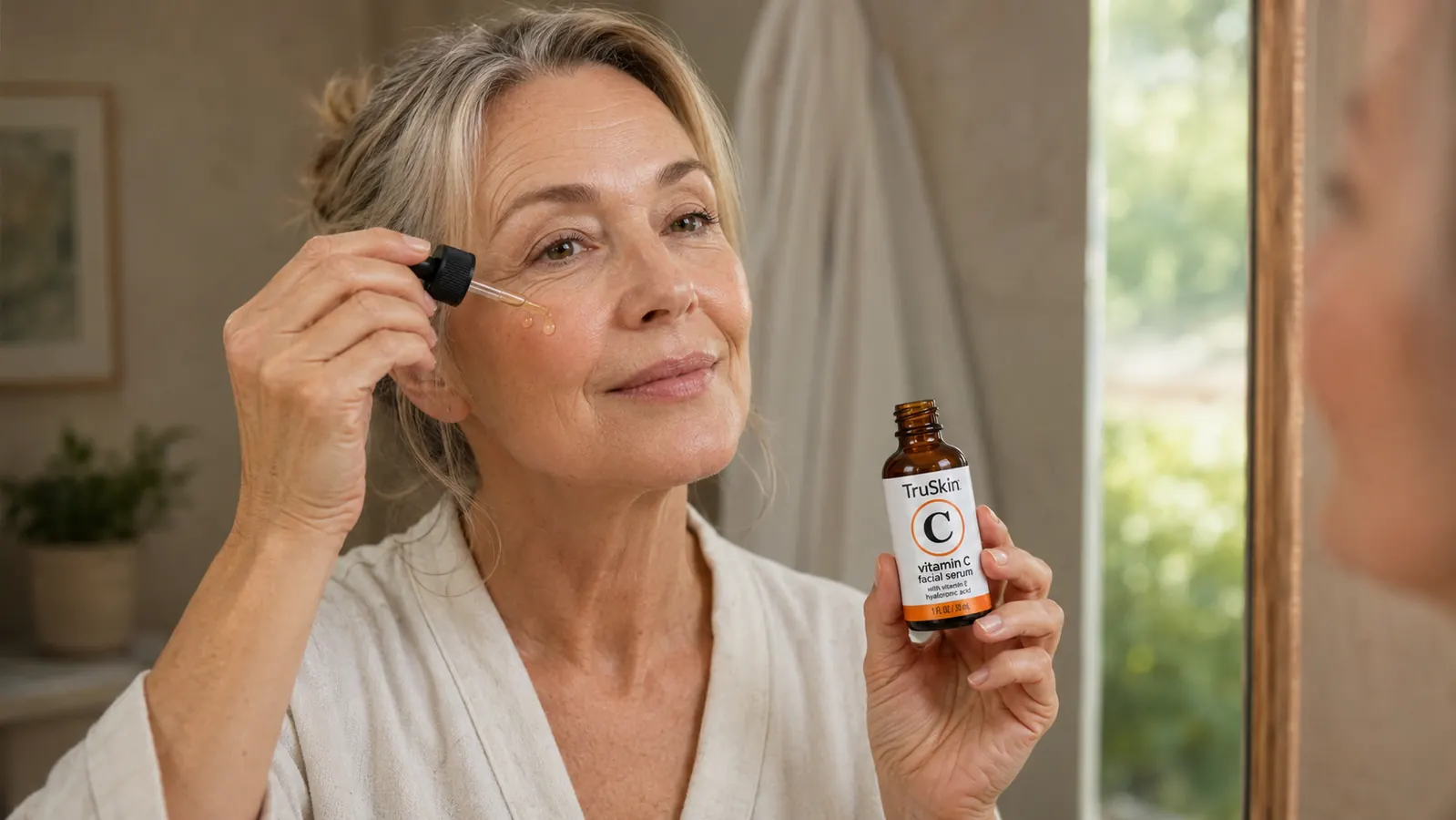
Where The Ordinary Wins
I want to be fair to it, because The Ordinary earned its reputation honestly. Its Vitamin C Suspension is 23% pure L-ascorbic acid, which is one of the highest concentrations you will find without a prescription or an in-office treatment. If your skin is genuinely tolerant, meaning you have used vitamin C products before without redness or peeling, that concentration can produce a more dramatic brightening effect than a gentler formula like TruSkin's. Several readers with oilier, thicker skin have told me it is the only vitamin C that felt strong enough to notice on their skin type.
Price is the other honest advantage. The Ordinary regularly runs eight to nine dollars less than TruSkin for a comparable size, and for someone who wants to try pure vitamin C for the first time without committing much money, that is a real consideration. If you are on a tight budget and your skin has never reacted badly to actives before, I understand the appeal of starting there. Just know you are trading comfort and shelf stability for that lower price, and in my experience the tradeoff was not worth it once I factored in how much of the bottle I ended up applying past its useful window.
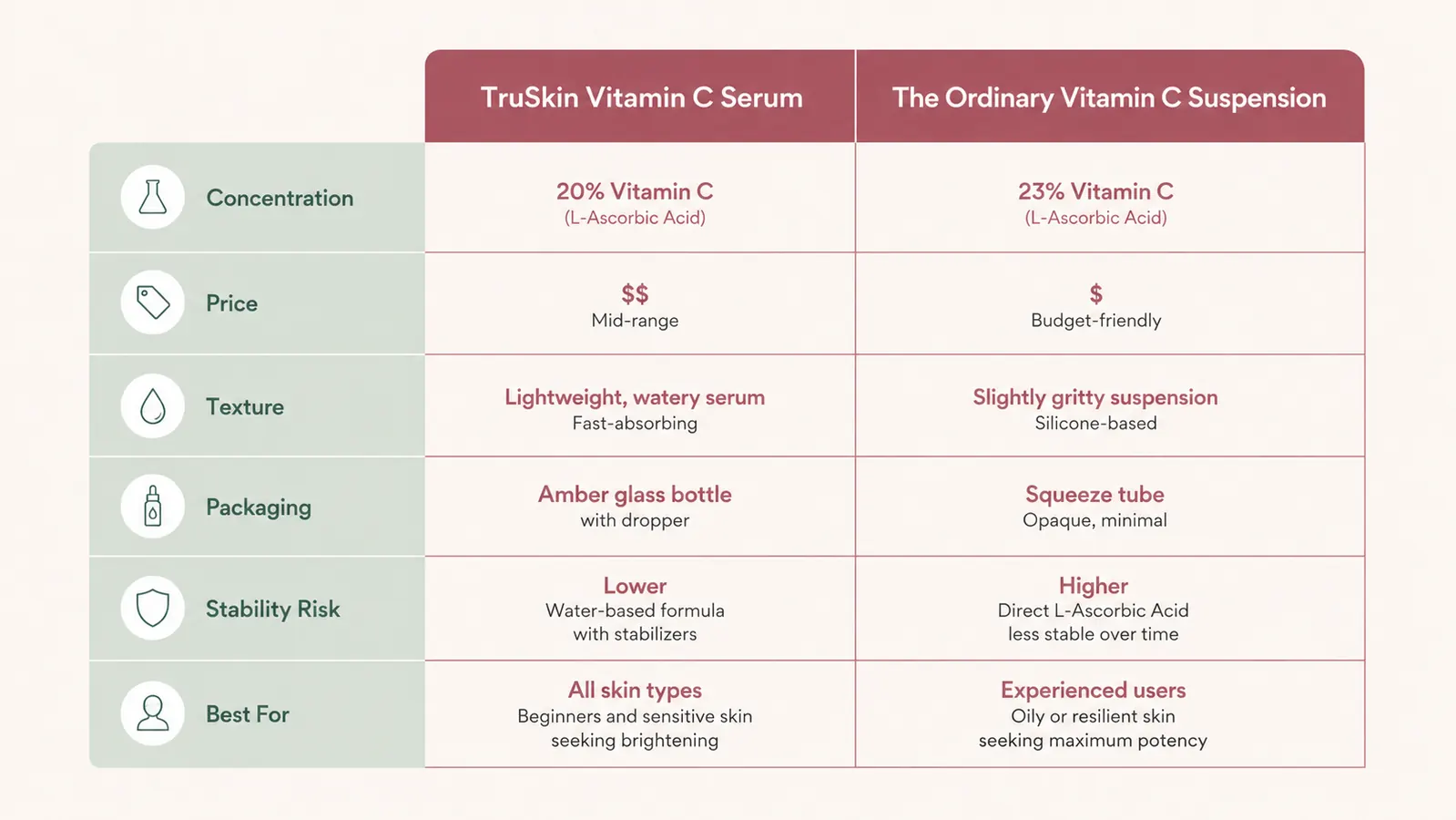
Texture, Layering, and How Each One Actually Feels
Layering is where the daily difference showed up most. TruSkin goes on smooth and disappears under my moisturizer, my sunscreen, and even a light foundation on the mornings I bother with one. It never pilled, meaning it never balled up under other products the way some serums do. The Ordinary's suspension, because it is not fully dissolved, needed a full minute to settle before I could put anything on top of it, and even then I occasionally felt small particles under my moisturizer through the middle of the day. That is a small thing on paper. It stopped being small by week three when I found myself dreading the extra step.
The scent is worth mentioning too, since nobody talks about it enough. TruSkin has a faint, clean citrus note that fades within a minute. The Ordinary's formula has almost no scent, which some people prefer, but it also has a slightly chemical smell in the first few seconds after application that a few readers have mentioned finding unpleasant. Neither is a dealbreaker on its own, but if you are sensitive to product smells first thing in the morning, TruSkin is the gentler experience.
Sticker price is not the same as cost per use, and that gap is where a lot of vitamin C comparisons get misleading. The Ordinary's bottle is cheaper on day one, but once mine started oxidizing around week four, I was applying a serum that had likely lost some of its effectiveness for the last third of the bottle, which is money spent on a product doing less than it should. I also needed a separate moisturizer step on days I used it, which is its own small ongoing cost. TruSkin's higher sticker price bought me a full bottle that worked the same on day forty-two as it did on day one, plus enough built-in moisture that I skipped an extra step most mornings. Once I did that math, the price gap narrowed considerably.
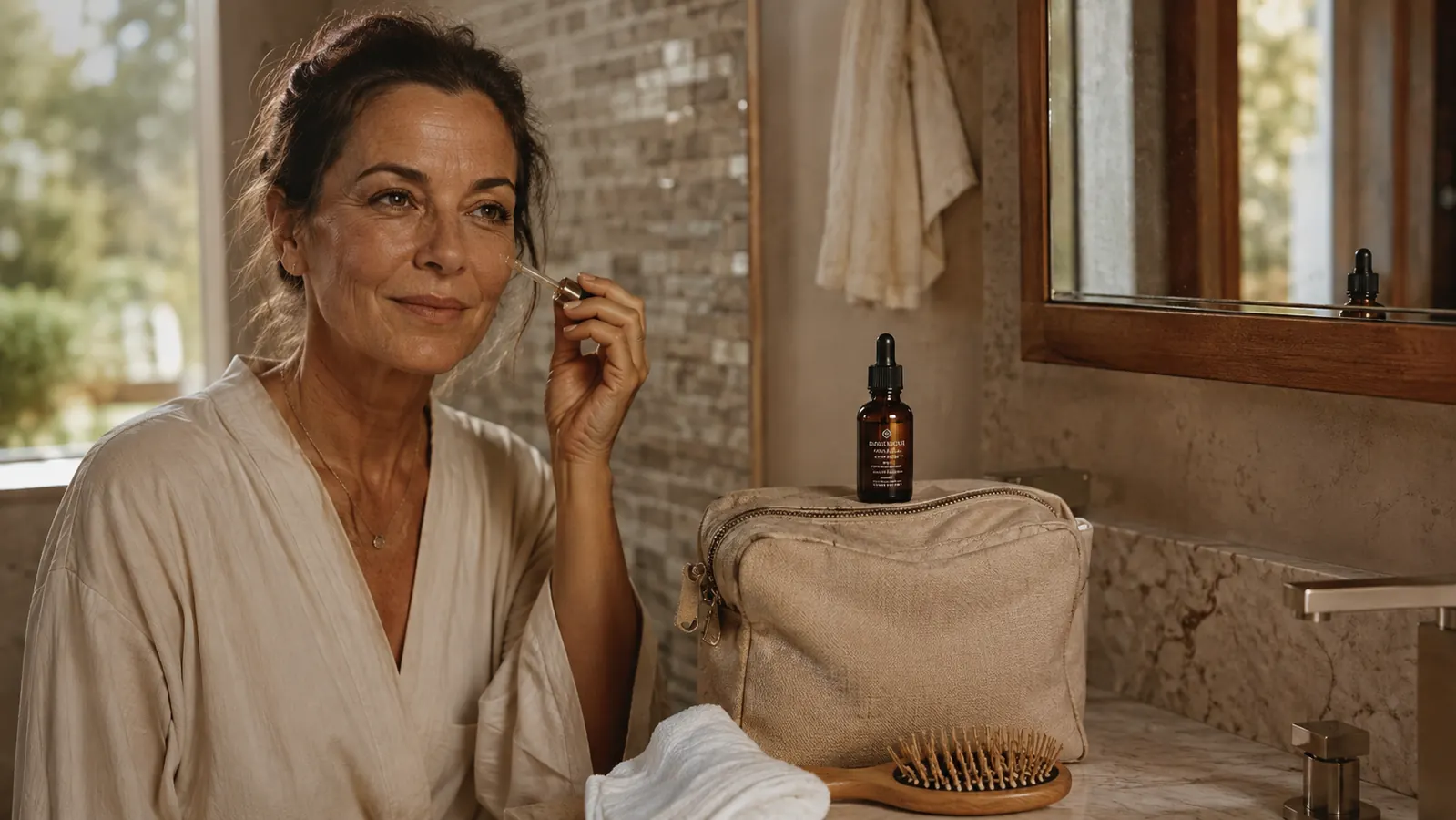
Six Weeks of Results, Side by Side
I did not run these two serums at the same time, since that would muddy any read on either one. I wore TruSkin daily for six weeks first, took a two week break, then wore The Ordinary daily for six weeks. By week four of TruSkin, the dull, slightly grayish look I get on my cheeks by late fall had noticeably lifted, and a few small dark spots near my hairline looked a shade lighter. By week four of The Ordinary, I saw a similar lightening around the same dark spots, arguably a touch more dramatic given the higher concentration, but it came with more redness that took longer to calm down each morning.
By the end of both six-week stretches, the visible brightening was closer than I expected going in. The difference was not really about the end result. It was about how much discomfort I tolerated to get there, and how consistently I actually used the product without skipping days because I dreaded the texture or the sting. Consistency is most of what makes a vitamin C serum work over months, and TruSkin was simply easier to stay consistent with. If you want the fuller, unfiltered account of what changed and what did not over a longer stretch, I wrote it all out in my honest TruSkin review, including the weeks where nothing seemed to be happening at all.
Who Should Buy Which
Buy TruSkin's Vitamin C Serum if you are new to vitamin C, have skin that leans dry or sensitive, or simply want a serum you can use every single morning without thinking twice about it. The added hyaluronic acid and vitamin E do real work keeping skin comfortable while the vitamin C does its job, the amber bottle protects the formula longer, and the price reflects a more complete, better-preserved product. This is the one I keep replacing when it runs out, and at fifty-six, that kind of quiet reliability matters more to me than a slightly higher concentration number on a label.
Buy The Ordinary's Vitamin C Suspension only if your skin already tolerates strong actives without irritation, you are comfortable with a gritty texture, and you plan to use the bottle up quickly before oxidation sets in. It can work well for the right skin type at the right price. It was not the right fit for mine, and based on the messages I get from readers in a similar stage of life, it is probably not the right fit for most of you either.
Whichever one you land on, patch test first. Put a small amount on the inside of your forearm, wait twenty-four hours, and only move to your face once you know how your own skin responds. Vitamin C is one of the more reactive ingredients on the shelf, and skipping that step is the single most common reason people give up on it after one bad week rather than giving it the six weeks it actually needs.
If you only try one vitamin C serum this year, make it the one that did not sting.
TruSkin gave me the brightening without the grit, the sting, or the color change in the bottle. Check today's price on Amazon and see the current rating for yourself before you decide.
Amazon Check Today's Price on Amazon →